Planning river rafting and confused about age limit, body weight, height, fitness, or fear of rapids? 😊
You’re not alone. River rafting requirements vary depending on location and difficulty (class) of rapids, but the core goal everywhere is the same — safety first.
This guide clearly explains rafting eligibility standards, with special relevance to rafting on the Kundalika River and similar commercial rafting destinations.
🎯 How Rafting Eligibility Is Decided
Most rafting operators focus on:
Whether you fit safely into standard safety gear
Whether you can sit, balance, and paddle effectively
Whether your physical condition matches the river class
Age, height, and weight are not judged alone — they are evaluated together.
⚖️ Weight Guidelines for River Rafting
✅ Minimum Weight
Typically 35 kg to 50 kg
Ensures:
Life jacket (PFD) fits correctly
Enough body weight to stay stable in rapids
Effective paddling power
🚫 Maximum Weight
Commonly 100 kg to 120 kg for most commercial rafting trips
Limits depend on:
Raft capacity
River class
Safety gear size
Some international operators allow higher limits, but Indian commercial rafting generally stays within 100–110 kg for safety.
📏 Proportionality Rule (Very Important)
Weight must be proportional to height ⚖️
✔ Example:
A 6-foot tall person at 100 kg → usually acceptable
A 5-foot tall person at 100 kg → may be rejected
Why this matters:
Balance inside the raft
Center of gravity
Ability to react quickly during rapids
👉 Final approval is always based on on-site safety assessment.
📐 Height Requirements for River Rafting
✅ Minimum Height
Usually 4 feet 6 inches (137 cm) or more
🛟 Safety Reason
Participants must be able to:
Sit on the outer tube
Reach the raft floor or foot braces
Brace themselves during turbulent water
If feet cannot reach the base, the risk of falling out increases.
👶 Age & Health Requirements (2026 Standards)
🎂 Age Limit
Minimum age: 14 years
Maximum age: 60 years
Age limits exist because rafting requires:
Fast reaction time
Strength to hold the paddle
Ability to follow safety commands
❤️ Health & Fitness Requirements
You must be in good physical condition.
🚫 Rafting is not recommended for people with:
Heart conditions
Epilepsy
Severe asthma
Recent fractures or surgeries
Participants must be able to:
Hold a paddle firmly
Respond quickly to “high-side” commands
Maintain balance in moving water
🏊 Swimming Ability – Is It Mandatory?
Not mandatory for low-grade rapids
Strongly recommended for Class III+ rapids
Being comfortable in water:
✔ Reduces panic
✔ Improves confidence
✔ Enhances overall safety
Life jackets keep you afloat, but calm behavior matters most 😌.
⚡ River Rafting Difficulty Levels & Eligibility
| Rapid Class | Minimum Age / Weight | Fitness Level Needed |
|---|---|---|
| Class I–II | 5+ years / 35 kg | Low – basic mobility |
| Class III | 12+ years / 45 kg | Moderate – active paddling |
| Class IV–V | 16+ years / 50 kg | High – strong swimming & stamina |
👉 Kolad rafting typically falls under Class II–III, making it suitable for beginners who meet safety criteria.
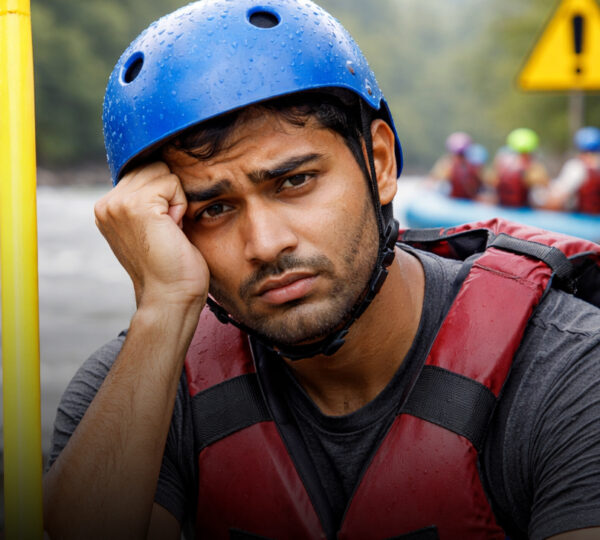
😨 Fear of River Rafting – Should You Worry?
Feeling scared before rafting is completely normal 😊
Most first-timers feel nervous until the first rapid.
Why fear fades quickly:
Safety briefing builds confidence
Guides control the raft
Life jackets provide constant buoyancy
Team support is always nearby
🌊 Fear often turns into excitement within minutes 😄.
🛡️ Final Safety Reminder
Before booking any rafting trip:
✔ Confirm age, height & weight eligibility
✔ Share medical conditions honestly
✔ Follow guide instructions strictly
✔ Choose verified, professional operators
Safety decisions taken by rafting staff are final and always made in your best interest.
🏁 Final Words
River rafting is an incredible adventure when done responsibly.
Understanding age, height, weight, fitness, and rapid difficulty helps ensure a safe, enjoyable, and memorable experience.
🚣♀️ Meet the requirements. Trust the guide. Enjoy the river.